Yahya Cholil Staquf: Architect of a New Global Islam


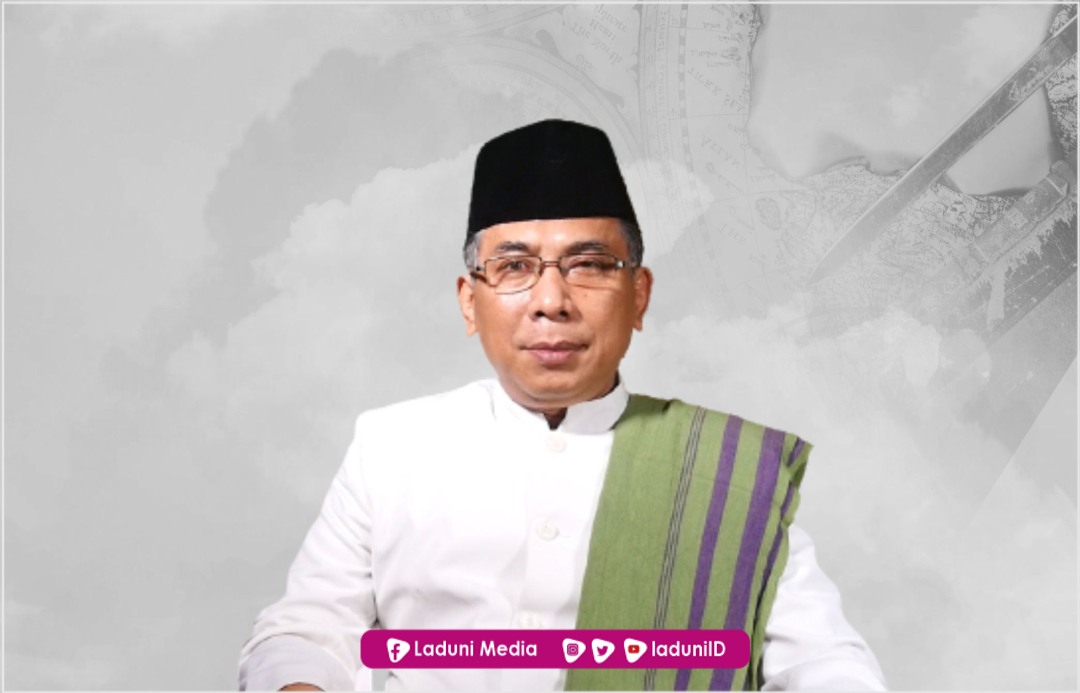
How does the world's largest Islamic organization, with tens of millions of followers rooted in the traditions of the Indonesian archipelago, navigate the turbulent currents of the 21st century? At the center of this monumental question stands one compelling figure: K.H. Yahya Cholil Staquf, affectionately known as Gus Yahya. Since becoming the Chairman of the Central Board of Nahdlatul Ulama (PBNU), he has emerged as more than just a new leader; he is the chief architect of a grand vision to elevate NU from a domestic religious powerhouse into a proactive and respected global player in the pursuit of world peace.
Table of Contents
Many recognize Gus Yahya for his bold, vocal, and often unconventional ideas. From the halls of the United Nations to interfaith dialogues across the globe, his voice resonates with a powerful call for what he terms "Humanitarian Islam." But who is the man behind the media spotlight and the strategic position he now holds? What intellectual and spiritual forces shaped his worldview? This article is not merely a biography or a record of leadership succession. It is an in-depth exploration of the philosophy, journey, and formidable challenges faced by the man now at the helm of the vast vessel that is Nahdlatul Ulama.
From Rembang's Heartland to the World Stage
To fully grasp the magnitude of a person's vision, one must trace the path and environment that forged it. Yahya Cholil Staquf was born on February 16, 1966, in Rembang, Central Java—a town renowned as one of NU's spiritual and intellectual nerve centers. He was raised in an environment steeped in the scholarly traditions of the organization. He is the son of K.H. Cholil Bisri, a charismatic cleric and senior politician, and the nephew of K.H. Mustofa Bisri (Gus Mus), a celebrated poet, cultural figure, and former Supreme Leader (Rais 'Aam) of NU. This upbringing served as a crucible, shaping his character, spirituality, and intellect from a very young age.
His educational foundation reflects a deliberate fusion of traditional Salafist scholarship and modern intellectual inquiry. He spent his formative years as a santri (student) at the prestigious Krapyak Pesantren in Yogyakarta, under the direct tutelage of the late K.H. Ali Maksum, a legendary NU Supreme Leader known for his profound knowledge. It was here that his roots in classical Islamic sciences, particularly in jurisprudence (fiqh) and exegesis (tafsir), were firmly planted.
However, Gus Yahya did not confine his learning to the walls of the pesantren. He pursued a formal education at Gadjah Mada University (UGM), majoring in Sociology. This unique combination of "mondok" (studying in a pesantren) and "kuliah" (attending university) proved to be a critical juncture in his intellectual development. It equipped him to not only dissect the intricacies of classical Islamic texts but also to engage fluently with modern political theory, sociology, and international relations. This dual lens allows him to analyze religious problems from a socio-political perspective and, conversely, to examine global issues with a deep spiritual sensitivity.
A third, profoundly influential chapter of his life was his close association with Indonesia's fourth President, K.H. Abdurrahman Wahid (Gus Dur). Gus Yahya served as Gus Dur's presidential spokesman, a role that granted him a front-row seat to the nexus of state power and international diplomacy. From Gus Dur, he absorbed groundbreaking ideas about pluralism, universal humanity, and the functional separation of religion and the state. It is this intellectual inheritance from Gus Dur that he has since systematically developed into a more structured, actionable global vision. This trifecta of influences—the deep-rooted pesantren tradition, the critical academic framework from UGM, and the pragmatic global experience with Gus Dur—is the key to understanding how he formulates religious ideas that are both courageous and acutely relevant to contemporary challenges.
The Grand Blueprint: Humanitarian Islam and Civilizational Fiqh
At the core of Gus Yahya’s thought and leadership lie two interconnected concepts: "Humanitarian Islam" and "Civilizational Fiqh." These are not mere slogans but a comprehensive ideological framework designed to reposition Islam—specifically the Ahlus Sunnah wal Jama'ah tradition championed by NU—within the global discourse.
For Gus Yahya, Islam can no longer be perceived as a source of conflict, an exclusive political identity, or an ideology at odds with the modern world order. He argues that the universal values embedded within Islam—justice ('adl), compassion (rahmah), human brotherhood (ukhuwah basyariyah), and public welfare (maslahah 'ammah)—must be brought to the forefront. They must become active solutions to global crises, from violent extremism and political polarization to environmental degradation and social inequality.
To achieve this, Gus Yahya confronts a difficult truth: the existence of "problematic elements" within the legacy of classical Islamic jurisprudence that require critical re-evaluation. He contends that certain legal concepts born in a pre-nation-state historical context—such as the political caliphate (khilafah), the classification of non-Muslims as second-class subjects (kafir dzimmi), and the rigid dichotomy of "the abode of Islam" (darul Islam) versus "the abode of war" (darul harbi)—are not only obsolete but dangerous when applied literally in the modern era. These are the very concepts frequently exploited by radical groups to justify violence, discrimination, and the rejection of an international order founded on the UN Charter.
The concrete action stemming from this vision is a movement to recontextualize these teachings. This is not about erasing or discarding tradition, but about undertaking a new ijtihad (scholarly interpretation) to ground Islamic principles in a way that truly makes them a "mercy for all creation" (rahmatan lil 'alamin) within the context of 21st-century civilization. One of the most tangible examples of this was the 2019 National Conference of NU Scholars, which recommended discontinuing the use of the term "kafir" (infidel) to refer to non-Muslim citizens of Indonesia. Instead, it proposed the term muwathinun (fellow citizens), which emphasizes equal rights and responsibilities and affirms the modern nation-state.
Steering the Supertanker: Reforms, Initiatives, and Resistance
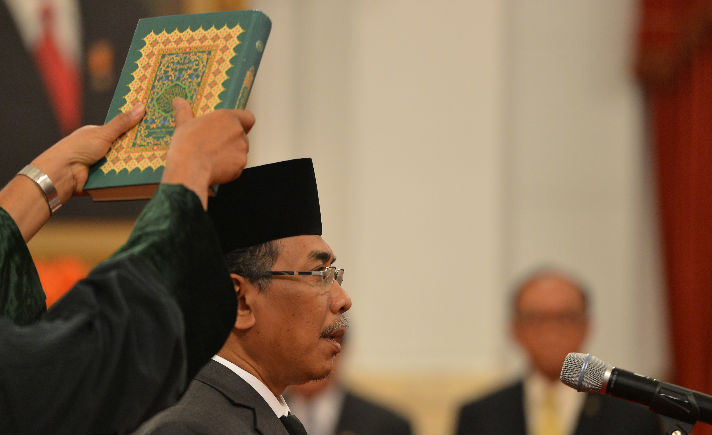
Since his election as PBNU Chairman at the 34th NU Congress in December 2021, Gus Yahya has wasted no time in translating his vision into action. His leadership slogan, "Merawat Jagat, Membangun Peradaban" (Caring for the Universe, Building Civilization), serves as a direct blueprint for his agenda.
His first and most consequential move was the institutional decoupling of NU from practical party politics. He declared unequivocally that PBNU, as an institution, would not serve as a political vehicle, would not affiliate with any political party—including the National Awakening Party (PKB), which has deep historical ties to NU—and would not endorse specific candidates in elections. The goal was crystal clear: to return NU to its original khittah (founding spirit) as a religious and social organization (jam'iyah diniyah ijtima'iyah) dedicated to serving the community through education, healthcare, economic empowerment, and spiritual guidance.
This bold step naturally created waves. Many lauded it as a noble effort to restore NU’s moral authority and integrity. Others, however, worried that NU would forfeit the political influence it had long wielded as a pillar of its strength. For Gus Yahya, this was a conscious and necessary choice. He argues that NU’s true and lasting influence lies not in fleeting transactional politics but in its enduring moral, intellectual, and cultural power to shape a more just and peaceful civilization.
On the global stage, his most significant breakthrough has been the initiation of the Religion 20 (R20) forum, launched as part of Indonesia's G20 Presidency in 2022. This unprecedented event successfully convened hundreds of religious leaders from every corner of the world—from Pope Francis (participating virtually) and the Grand Imam of Al-Azhar to prominent rabbis, cardinals, and patriarchs. The R20 was established to position religion as a source of solutions, not problems, for global crises. It became the primary platform for Gus Yahya to present NU's vision of Humanitarian Islam directly to an international audience, establishing a new global network for religious peacebuilding.
Of course, this journey is far from smooth. The challenges are immense, arising from both within and outside the organization. Internally, there is resistance from factions comfortable with the status quo and NU’s long-standing proximity to political power. Furthermore, communicating complex ideas like Civilizational Fiqh to the grassroots membership is a monumental undertaking. Externally, his progressive ideas are often misunderstood, branded as "liberal," or fiercely opposed by transnational Islamist groups who view his vision as a direct threat to their own rigid ideologies.
Ultimately, K.H. Yahya Cholil Staquf is more than a chairman; he is a thinker, a strategist, and an executive navigating a radical new course for Nahdlatul Ulama. With intellectual courage, he is dismantling long-held assumptions within Islamic discourse and offering an alternative narrative—one that is peaceful, inclusive, humanist, and deeply relevant to the world's most pressing challenges.
Whether his grand vision will be fully realized remains to be seen. But what is certain is that his leadership has already unleashed a powerful and irreversible tide of change. He has compelled a global re-evaluation of the role of religion in the public square and has positioned NU, and the face of Indonesian Islam, as a vital beacon of hope amidst the shadows of global conflict and extremism. The voyage is long and fraught with obstacles, but the destination has been clearly charted: to guide NU beyond its national shores to truly care for the universe and build a global civilization.